Most pantry organization advice assumes you have the right storage to begin with. Baskets, labels, matching containers. But if your pantry is a deep single-shelf closet, a poorly configured cabinet row, or just a corner of the kitchen that accumulates everything with nowhere else to go, no amount of organizing product will fix it.
Real pantry organization starts with the right physical storage. Here’s what actually works in real kitchens, based on how people actually cook and shop.
The problem with most pantry storage
Standard pantry shelves are deep. Deep shelves are the enemy of visibility and access. Things go to the back and don’t come back until you’re looking for something else. This isn’t an organizational failure. It’s a storage design failure.
The solution isn’t to buy organizers to go on the deep shelves. It’s to reconfigure the storage so that depth works for you instead of against you.
Pull-out drawers and shelves
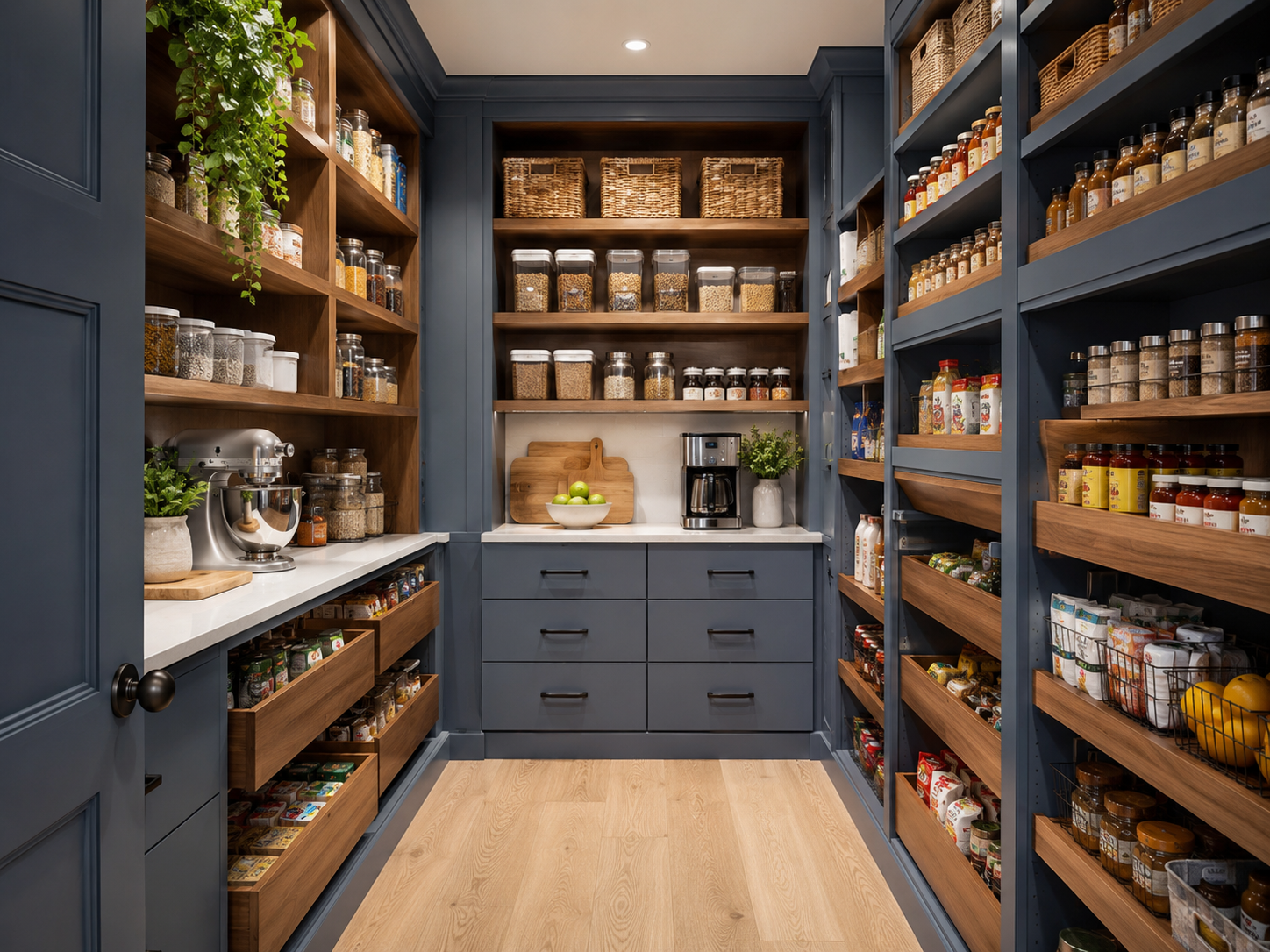
A pull-out drawer inside a pantry cabinet is probably the single most impactful upgrade for a real-world pantry. When you pull a drawer out, everything in it is visible and accessible, including what’s at the back. This eliminates the archaeological dig through the back of the shelf problem entirely.
Pull-out shelves work at every depth. Deep base cabinets that currently hold pots or bulk items become far more functional when converted to drawers. Pantry towers with pull-out shelves at multiple heights give you good access to items of every size.
Zone your pantry the way you actually cook
Most pantry organization advice tells you to group like items together. That’s a start, but more useful is grouping by how often you use things and how you cook.
If you cook a lot of one type of cuisine, group those ingredients together rather than separating them by product type. A baking station with all your baking supplies in one zone is more efficient than finding flour with grains, sugar with sweeteners, and vanilla extract with spices.
Cabinet configurations that help the most
Pantry tower with adjustable shelves
A full-height pantry cabinet with adjustable shelves can be reconfigured as your storage needs change. Essential for households where the pantry has to handle different storage demands at different points in the year.
Base cabinet pull-outs for heavy items
Oils, vinegars, canned goods, and bulk items are heavy and awkward to reach when they’re sitting at the back of a base cabinet. Pull-out drawers at base level make these items accessible without bending and searching.
Door-mounted storage
The back of a pantry door is usable storage space. Door-mounted spice racks or shallow shelving for small items can add meaningful capacity without taking up any shelf real estate.
Open shelving for everyday items
Open shelves at eye level are faster to access than cabinet doors and create a visual inventory of what you have. They work best for items you use daily and keep organized out of habit. They’re unforgiving if the household doesn’t naturally put things back in the right place.
What custom cabinetry changes
Stock pantry cabinets come in standard widths and configurations. Custom cabinetry fits your actual space: the odd-width alcove, the corner that stock cabinets can’t reach, the specific depth that matches how you stock your pantry.
Custom also means you can specify exactly which shelves are adjustable, where the pull-outs go, how deep each zone is, and what the interior finish looks like. For a pantry you’re going to use every day, that level of fit matters.
Summit Remodeling builds custom pantry and kitchen cabinetry for homes throughout Summit County, Ohio. If your current pantry isn’t working and you want storage that actually fits the way you cook, reach out and let’s figure out what that looks like.
continue reading