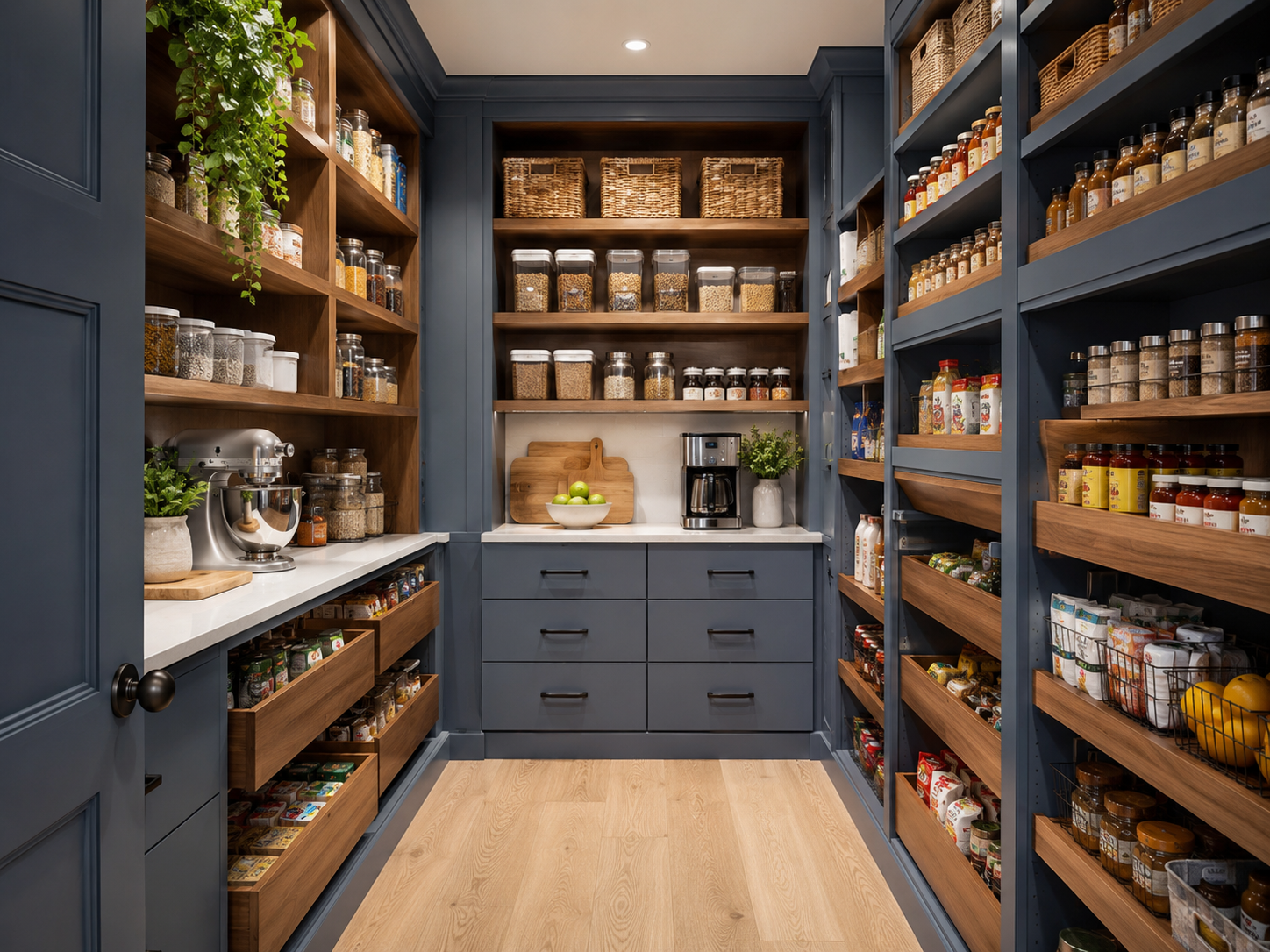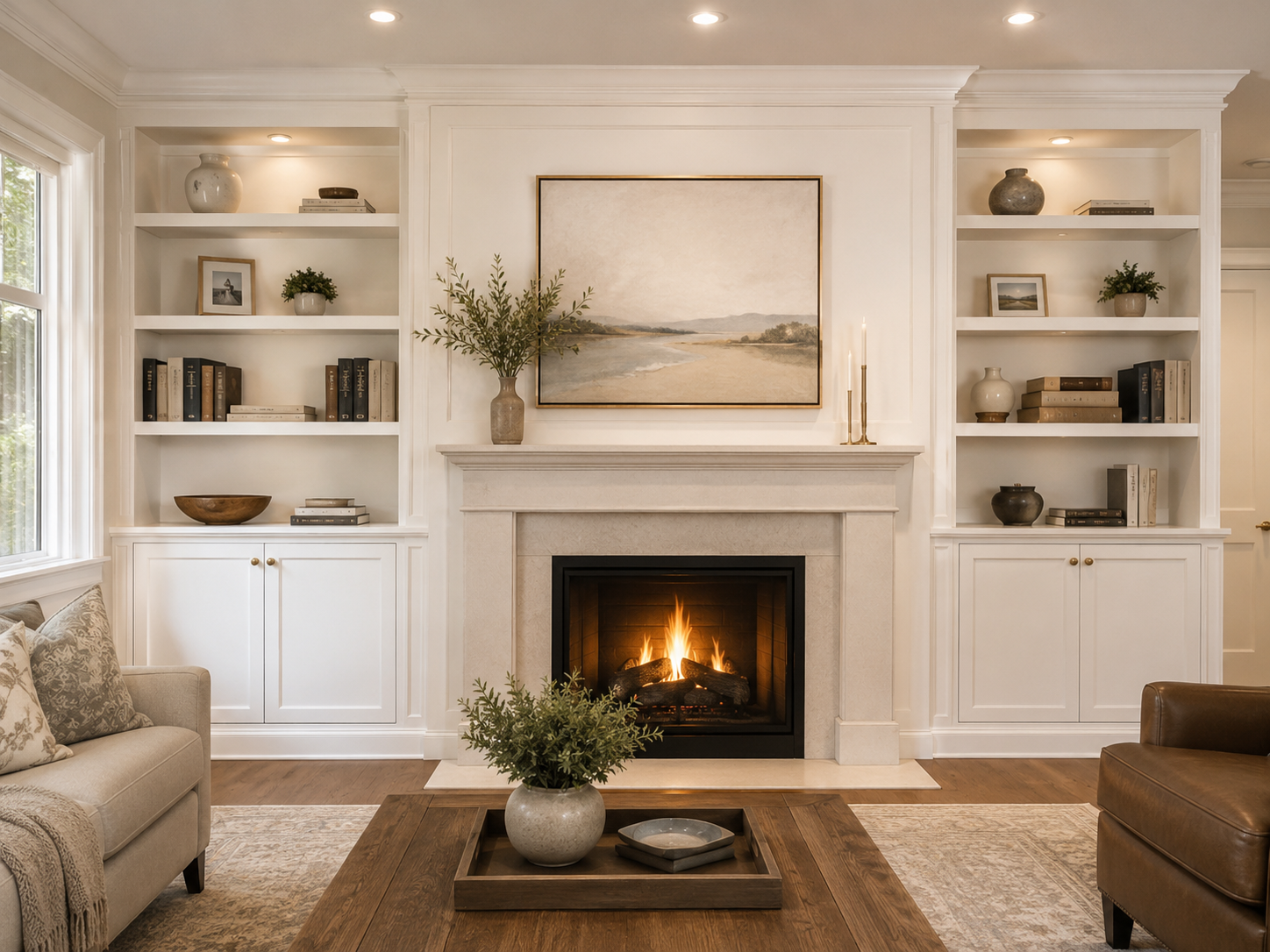
At some point in nearly every home project, the question comes up: should we build something in, or just get a good piece of furniture?
It’s a reasonable question. Built-in cabinetry costs more upfront. Freestanding furniture is flexible and movable. But the right answer depends on what the space needs, how long you’re staying, and what problem you’re actually trying to solve.
Here’s how to think through it.
What built-ins actually do
A built-in is any cabinet, shelving unit, or storage system that’s constructed to fit a specific wall, alcove, or space in your home. It’s anchored, it’s custom-fitted, and it uses space that freestanding furniture often can’t reach: the wall above a doorway, the awkward corner behind a door, the full height of a ceiling.
Built-ins are common in living rooms around fireplaces, in home offices, in mudrooms, in bedroom closets, and in kitchens and bathrooms. They can be painted to match the walls so they read as part of the architecture, or finished in a contrasting tone to stand out as a feature.
What freestanding furniture does well
Freestanding furniture is movable, which matters if you’re renting, planning to move, or just not sure about the layout yet. It’s also available at a wide range of price points and can be replaced or reconfigured without any construction.
For rooms where you want flexibility, or where the space is genuinely working fine with what you have, freestanding furniture is often the smart choice.
Where built-ins win
Awkward or underused spaces
If you have a wall alcove, a dead corner, or a low-ceiling nook that freestanding furniture can’t fit properly, a built-in can turn it into genuinely functional storage. This is one of the clearest wins for custom cabinetry.
Rooms that need to look intentional
A freestanding bookcase next to a fireplace reads as furniture. A built-in that flanks the fireplace symmetrically reads as architecture. If the room is a focal point of the home, that distinction matters, especially at resale.
Maximizing vertical space
Freestanding furniture almost never goes floor to ceiling without looking makeshift. Built-ins can, and often should, which gives you significantly more storage in the same footprint.
Long-term value
Built-ins add to the perceived and appraised value of a home in a way that furniture doesn’t. Well-built, well-fitted cabinetry reads as a quality feature to buyers.
Where freestanding furniture wins
You’re not staying long
Built-ins are an investment in the house. If you’re planning to move in two or three years, you probably won’t recoup the cost through increased sale price alone. Furniture moves with you.
The room layout is still in flux
If you’re not sure how you want to use the space yet, built-ins lock you into a decision. Furniture lets you experiment.
Budget is a real constraint right now
A quality freestanding piece from a good furniture maker can be significantly less expensive than custom cabinetry and look great. If budget is tight, furnishing the room now and building in later is a completely reasonable plan.
The hybrid approach
Many homeowners end up here, and it works well. Build in the spaces where it clearly adds value: the living room wall, the mudroom, the bedroom closet. Furnish the spaces where flexibility or budget make more sense.
You don’t have to choose one approach for the whole house.
What to ask before committing to built-ins
If you can answer yes to the first three and you’re comfortable with permanent, built-ins almost always deliver better function and better appearance than the freestanding alternative.
Summit Remodeling builds custom cabinetry and built-in storage for homes throughout Summit County, Ohio. If you’ve got a wall, a corner, or a closet that isn’t working, reach out and we’ll tell you what’s actually possible.
continue reading