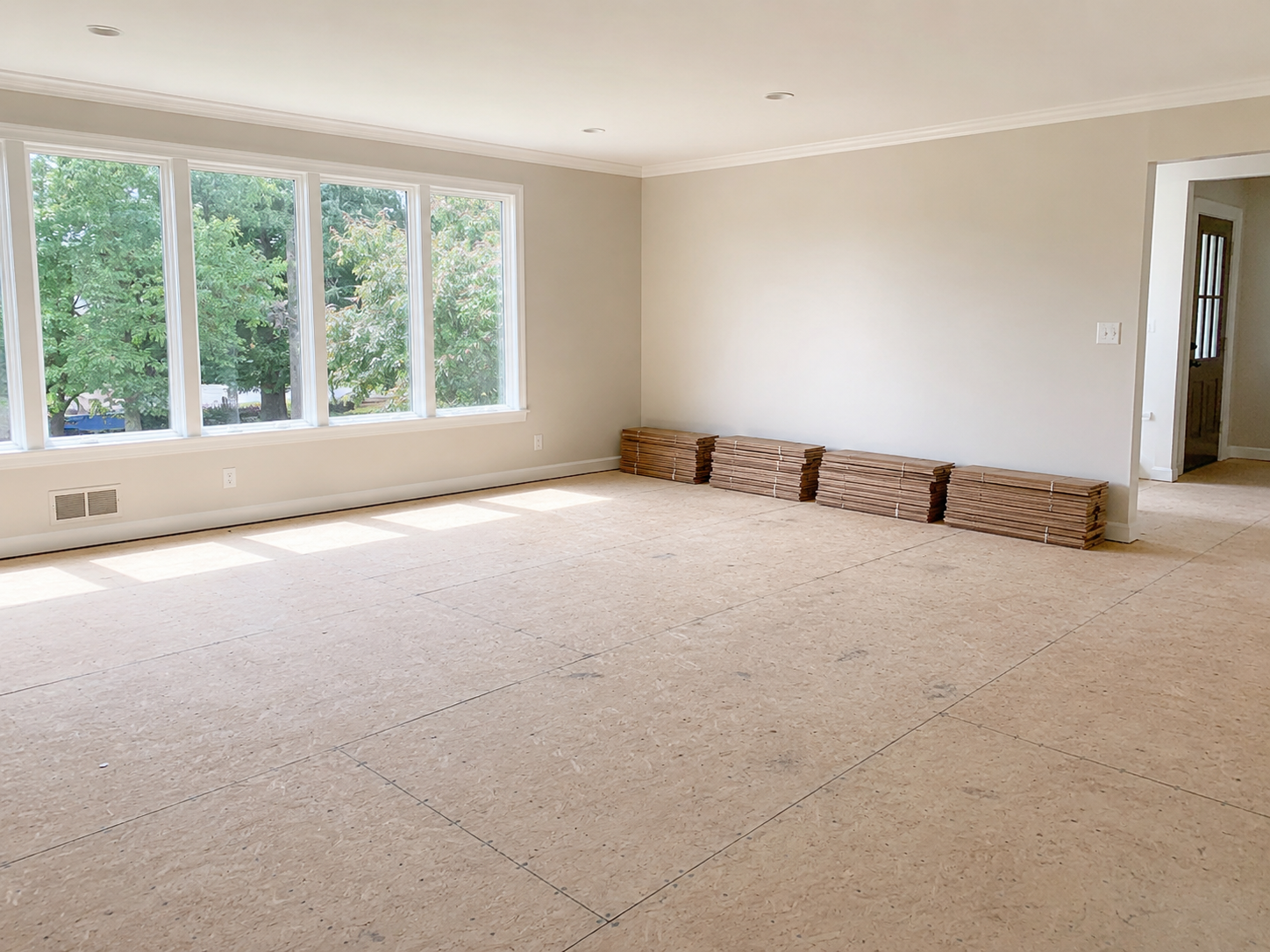
New flooring is one of the highest-impact updates you can make to a home. It changes the feel of every room it touches. It also requires more preparation than most homeowners expect, and the prep work happens mostly on your end, not the installer’s.
Here’s what to handle before the crew arrives so your installation goes smoothly and you don’t pay for delays caused by avoidable surprises.
Clear the rooms completely
This sounds obvious, but it’s the step that catches people off guard on scope. Flooring installers move furniture in a general sense, but most contracts specify that the rooms should be cleared before they arrive. That means:
The heavier and more fragile, the more important it is to handle this yourself before installation day. Moving a TV stand loaded with equipment on installation morning is a bad start for everyone.
Remove existing floor coverings if agreed upon
Clarify with your contractor in advance: is the demo and removal of existing flooring included in the quote? If yes, it’ll happen on day one. If not, you’ll need to handle it yourself, or schedule it as a separate scope item.
For carpet specifically, many homeowners choose to pull it themselves to save cost. It’s labor-intensive but not technically difficult: pull up the carpet, pull the pad, pull the tack strips, and dispose of the material. Your installer can advise on whether this makes sense for your project.
Let hardwood and engineered wood acclimate
This is a critical step that gets skipped more often than it should. Wood and engineered wood flooring needs to acclimate to the humidity and temperature of your home before it’s installed. The standard is to leave the boxes in the room where they’ll be installed, opened, for a minimum of 48 to 72 hours, though some manufacturers specify longer periods.
Installing wood flooring before it has acclimated can lead to gapping, buckling, or cupping after installation as the wood adjusts to your home’s environment. This is not covered under most warranties.
LVP has more dimensional stability and typically requires less acclimation time, but check the manufacturer specification. The climate difference between a warehouse and a climate-controlled home still matters.
Address subfloor issues in advance
Your installer will assess the subfloor before installation begins. If there are issues, they need to be corrected before the new floor goes down. Common problems include:
If your home has a history of moisture in the basement or crawlspace, mention this to your contractor before installation. Moisture-related flooring failures are expensive and not always obvious until months after installation.
Turn off radiant heat systems
If your home has radiant floor heating, the system should be turned off 24 hours before installation and left off for 24 hours after. This allows the subfloor temperature to normalize and reduces the risk of the new floor reacting to heat during the installation and curing process.
Keep the space at normal living temperature and humidity
Your home should be at the temperature and humidity level you normally maintain before, during, and after installation. Bringing flooring into a vacant home that’s been sitting cold and dry, installing it, and then returning to normal conditions is a recipe for movement issues later.
The day of installation
Have a clear path for the crew to move material in from their vehicle. Know in advance where they’ll be staging tools and extra material. Make sure pets and kids are out of the installation zone for safety.
And communicate any concerns about specific areas before the crew starts, not after they’ve already laid the first few rows.
Summit Remodeling installs flooring as part of full remodels and as standalone projects throughout Summit County, Ohio. If you’re planning a flooring project and want to know exactly what to prepare, reach out and we’ll walk you through it before you schedule the work.
continue reading