If you’ve spent more than ten minutes looking at flooring options, you already know this feeling: you find a floor you love, then immediately start second-guessing it because someone on a forum said it scratched in six months.
Hardwood and luxury vinyl plank are the two most popular choices for main living areas right now, and the debate between them is genuinely worth having. Both look great. Both have real tradeoffs. And the right answer depends almost entirely on how your household actually lives.
Here’s an honest comparison.
What is LVP, exactly?
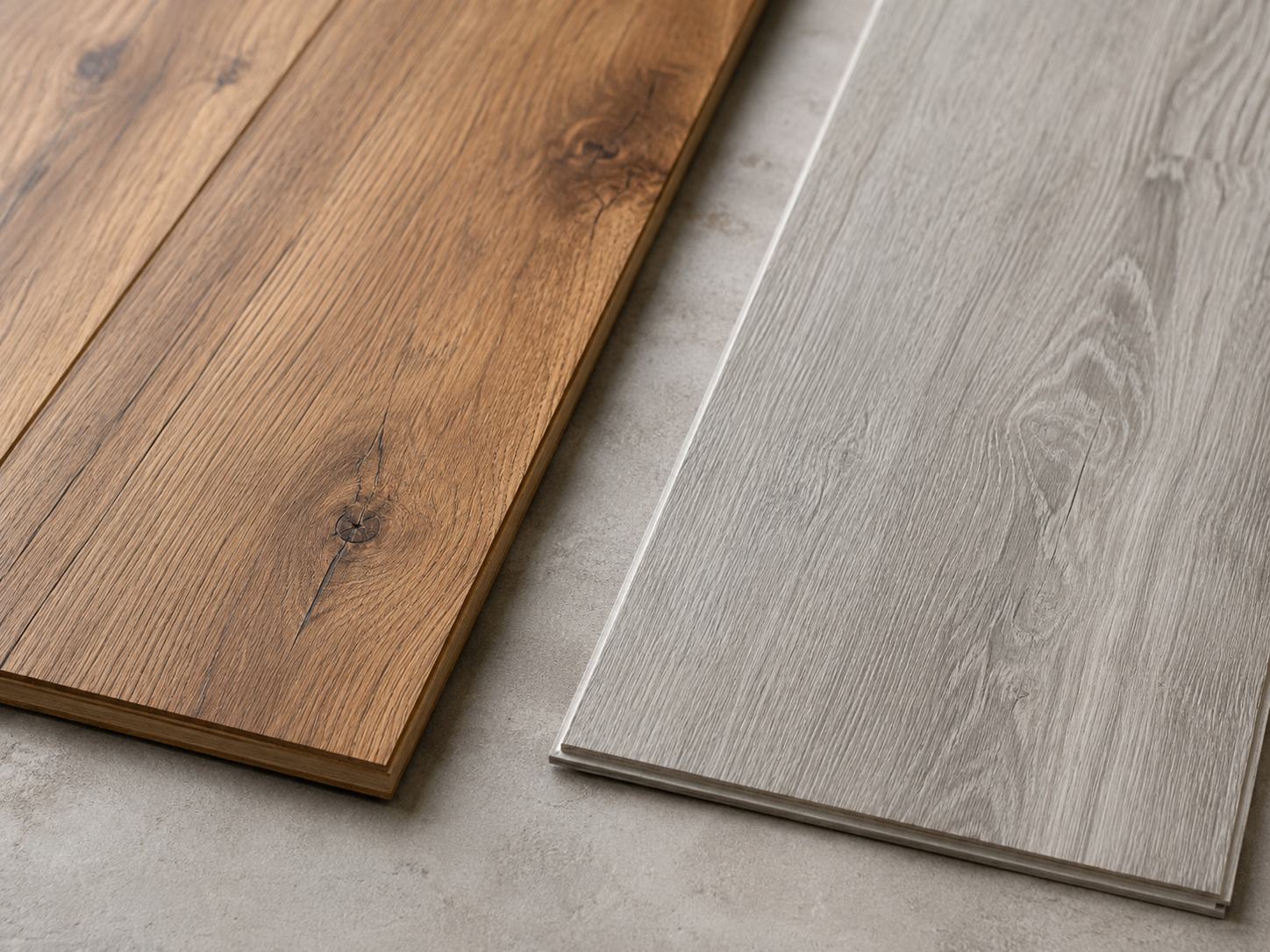
Luxury vinyl plank is a multi-layer synthetic flooring product designed to look like wood. It’s not the vinyl flooring your grandparents had. Modern LVP has a realistic embossed surface layer, a rigid or semi-rigid core, and a wear layer on top that determines how much abuse it can take before showing damage.
It’s waterproof, relatively soft underfoot compared to hardwood, and comes in a wide range of looks that are increasingly hard to distinguish from real wood at a glance.
What counts as hardwood?
Solid hardwood is exactly what it sounds like: a plank of real wood, typically 3/4 inch thick, that can be sanded and refinished multiple times over its lifetime. Engineered hardwood is a real wood veneer bonded to a plywood core, which makes it more stable in humid environments while keeping the genuine wood surface.
When most people say hardwood, they mean one of these two, and both behave differently than LVP in daily life.
Durability: the honest version
LVP wins for water and heavy traffic
LVP is waterproof. Full stop. Spills, pet accidents, wet boots tracked in from the garage? None of that gets through to the core if you clean it up in a reasonable timeframe. That’s a real advantage in kitchens, bathrooms, mudrooms, and homes with dogs who don’t care about your nice things.
The wear layer thickness matters here. A commercial-grade LVP with a 20-mil wear layer will take years of daily punishment. A thinner residential product will show scratches sooner.
Hardwood handles scratches differently
Solid hardwood scratches. So does LVP, but hardwood can be sanded and refinished when the surface damage accumulates. That’s its long-term advantage: a well-maintained hardwood floor can look fresh again decades later. LVP can’t be refinished. When it’s worn, it’s replaced.
For most households, this is a 15 to 20-year conversation, not a 2-year one. But it’s worth knowing
Pets and kids: real talk
Both floors can work. Here’s the breakdown:
Cost comparison
LVP is generally less expensive both in material cost and installation. Solid hardwood has a higher material cost, and installation requires more expertise and time.
However, if you’re planning to stay in the home for 20-plus years and the floor will see moderate traffic, hardwood’s refinishability can make the long-term math competitive. For a home you’re planning to sell in five to eight years, LVP often makes more financial sense.
Resale value
Real hardwood typically adds more perceived value for buyers, especially in the primary living areas of the home. LVP reads as updated and clean to most buyers, but sophisticated buyers know the difference.
That said, worn hardwood does not outperform fresh LVP. Condition matters more than material category to most buyers.
The bottom line
Choose LVP if you have pets, young kids, any moisture concerns, or want a lower-maintenance floor you can replace section by section down the road.
Choose hardwood if you want a floor you can refinish, you’re willing to manage maintenance more carefully, and you’re staying in the home long enough to justify the investment.
If you’re in Summit County, Ohio and you’re planning a flooring project, Summit Remodeling can walk you through what makes sense for your specific rooms and subfloor condition, then install it cleanly from start to finish.
continue reading