
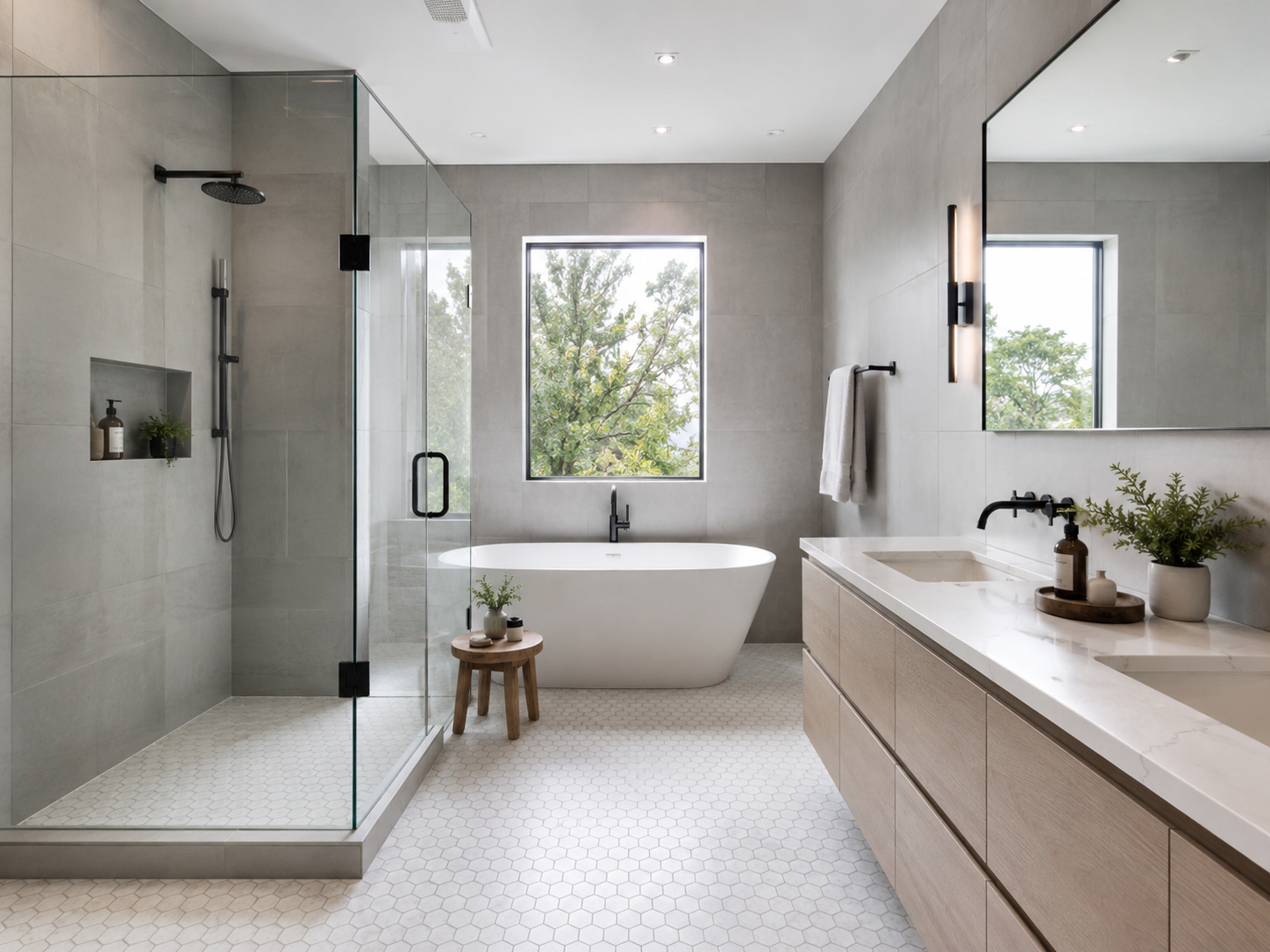
Standing in a tile showroom staring at hundreds of options is one of the more genuinely overwhelming parts of a bathroom remodel. Sizes, formats, finishes, materials, grout colors. It adds up fast.
The good news is that the decisions get a lot simpler when you understand a few basic principles. Here’s how to think through bathroom tile without losing your mind.
Size: bigger is not always better, but often it is
Tile size affects how a room feels and how long installation takes. Here’s the general breakdown:
Small mosaic tile (1×1 to 2×2 inches)
Best for shower floors and curved surfaces. The small size means more grout lines, which actually provides grip underfoot on a wet shower floor. More grout lines also mean more cleaning, so plan accordingly.
Mid-size tile (3×6 to 12×12 inches)
The classic subway tile range. Versatile for walls, backsplashes, and smaller bathroom floors. A 3×6 subway tile on bathroom walls is a timeless choice that works across a wide range of bathroom styles and ages well.
Large format tile (18×18 inches and up)
Makes small to medium bathrooms feel larger by reducing the number of grout lines and giving the eye a cleaner surface to read. Large format tile requires a very flat subfloor and more precise installation, so skill matters more here than with smaller tiles. Lippage, where one tile edge sits slightly higher than the adjacent tile, is more visible with large format tile.
Format: the shape conversation
Beyond square tile, you’ll encounter a few common formats:
Subway tile
Rectangular tile, typically 3×6, installed in a horizontal running bond pattern. It’s popular for good reason: it’s flexible, it’s clean, and it works with almost any other design choice in the space.
Hex tile
Hexagonal tile, most often seen on floors. Small white hex tile on a bathroom floor is a classic look that has been popular for over a century for a reason. It holds up, it reads as intentional, and it hides small imperfections better than large flat tiles.
Plank tile
Long, narrow tile that mimics wood planks. A common choice for bathroom floors where homeowners want a wood look without the moisture risk of actual wood.
Penny tile
Small round tile, usually on a mesh backing. Used mostly for floors and shower floors. Classic look, more grout line maintenance.
Finish: the part that actually gets touched
Matte
Doesn’t show water spots or fingerprints as readily as polished tile. A good choice for floors and high-use wall areas. Slightly more grip underfoot on floors, which matters in a wet shower.
Polished or high-gloss
Reflects light and can make a space feel brighter and larger. Shows water spots and soap residue readily. Best used on walls where it won’t be walked on and where you’re willing to wipe it down.
Honed
A middle ground: smooth but not shiny. It has the soft, clean look of polished tile without the high-maintenance reflective surface. Works well in both contemporary and transitional bathrooms.
Textured
Best reserved for shower floors and areas where slip resistance matters. Not a great choice for walls where cleaning is frequent.
Grout: the last decision and a big one
Grout color significantly affects the final look. Wide grout lines draw attention to the tile pattern. Narrow grout lines in a close-matching color make the surface feel more seamless.
Dark grout with white tile looks graphic and intentional. White grout with white tile reads cleaner and softer. If the tile floor sees heavy traffic, mid-tone grout in a grey or tan hides more than pure white.
Epoxy grout is harder to install but significantly easier to keep clean than standard cement grout. It’s worth asking about if the shower or floor gets heavy use.
The practical starting point
Before you shop, decide: what’s the design direction of the bathroom? Soft and spa-like? Graphic and modern? Classic and timeless? That single decision will eliminate most of the options at the showroom before you start.
Then pick your floor tile first, since it tends to be the most constrained by size and slip-resistance requirements. Let the floor anchor the rest of your choices.
Summit Remodeling handles tile work as part of full bathroom remodels across Summit County, Ohio. If you want help thinking through what will actually work in your space before you buy anything, reach out and we’ll talk through it.
continue reading
